
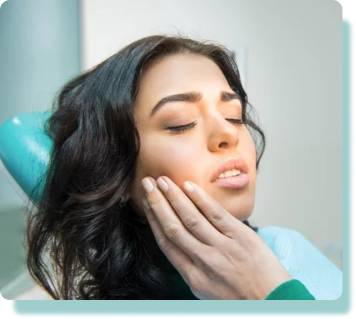

How the TMJ Works & Why Problems Happen
The TMJ is one of the most complex joints in the body, capable of sliding, rotating, and hinging. Any imbalance, misalignment, or irritation in this system of bones, discs, ligaments, and muscles can lead to a TMD.
Common Causes of TMD
- Jaw injury or trauma
- Grinding or clenching your teeth (bruxism)
- Misaligned bite
- Arthritis in the jaw joint
- High stress levels causing muscle tension
- Poor posture affecting jaw and neck muscles
How TMD Impacts Daily Life
- Difficulty eating or speaking
- Sleep disturbances
- Dependence on pain medication
- Worsening headaches or migraines
- Increased muscle tension throughout the body
Signs & Symptoms of TMD
- Jaw pain or tenderness
- Clicking, popping, or grinding noises
- Limited jaw movement or lockjaw
- Headaches or chronic migraines
- Neck, shoulder, or upper-back tension
- Earaches, ringing, or fullness
- Facial muscle fatigue
- An uncomfortable or uneven bite
- Pain behind the eyes
When to Seek TMD Treatment
- Symptoms lasting longer than a few days
- Jaw locking or restricted movement
- Worsening headaches
- Clicking accompanied by pain
- Difficulty chewing or opening your mouth
Imaging When Needed
Depending on the findings, the dentist may recommend dental X-rays or refer for other imaging.
Advanced imaging is not required for every patient. Diagnosis generally begins with the patient’s history and a clinical examination.
Conservative TMD Treatment Options
TMD care should normally begin with simple, reversible approaches. More invasive or permanent treatment should be approached cautiously.
Short-Term Diet Changes
During a painful flare, temporarily choosing foods that require less chewing may reduce strain.
Long-term unnecessary restriction should be avoided unless advised by a healthcare professional.
Reducing Jaw-Straining Habits
Patients may be advised to reduce:
- Gum chewing
- Nail biting
- Chewing pens
- Wide yawning
- Repeated jaw testing
- Daytime clenching
- Resting the chin on the hand
Heat or Cold
Heat or cold may be recommended for selected joint or muscle symptoms.
Follow the instructions provided for your specific condition.
Jaw Exercises
Gentle stretching, movement or strengthening exercises may be recommended by a dentist or physiotherapist.
Do not force the jaw through sharp pain or locking.
Physical Therapy
Physical therapy may help selected patients improve jaw movement and manage muscle-related pain.
It may include:
- Manual therapy
- Movement exercises
- Muscle techniques
- Neck and postural assessment
- Home exercises
NIDCR includes physical therapy among intermediate treatment options when simpler approaches are insufficient.
Night Guards and TMD
A custom oral appliance may be considered when grinding or clenching contributes to tooth damage or muscle strain.
A night guard may:
- Separate the teeth
- Protect natural teeth
- Protect fillings and crowns
- Distribute contact forces
However, a guard does not cure every TMD condition or guarantee pain relief.
An appliance should not be designed to create a permanent bite change. Stop wearing it and contact the dentist if it causes:
- Increasing pain
- Tooth soreness
- Gum irritation
- Jaw discomfort
- A lasting change in the bite
Learn more about custom night guards.
Should the Bite Be Permanently Changed?
An uncomfortable bite may be considered during the examination, but TMD should not automatically be blamed on imperfect tooth alignment.
Permanent bite-changing procedures should not be used routinely as a TMD solution. NIDCR recommends caution with irreversible treatment and places complex jaw procedures later in the treatment hierarchy.
Dental treatment may still be needed for a cracked tooth, failed restoration or another separate dental problem.
When May Referral Be Needed?
Referral may be appropriate when:
- The diagnosis is uncertain
- Pain is severe or persistent
- The jaw repeatedly locks
- Movement is significantly restricted
- Symptoms began after major trauma
- Conservative treatment has not helped
- A complex joint condition is suspected
- Surgery or joint injections are being considered
- Chronic facial pain requires broader assessment
Referral may involve:
- A physician
- Physiotherapist
- Orofacial-pain clinic
- Oral and maxillofacial surgeon
- Ear, nose and throat specialist
- Neurologist
- Sleep physician
Is Surgery Commonly Needed?
Most patients do not begin with surgery.
NIDCR recommends trying simple treatment first and considering joint-entry procedures or surgery cautiously, generally only after appropriate conservative care and specialist assessment.
My City Dental should not be described as providing TMJ surgery unless that service is specifically confirmed.
When Is Jaw Pain Urgent?
Seek urgent dental or medical assessment when you have:
- A jaw locked open or closed
- Sudden inability to open normally
- Major facial trauma
- Rapidly increasing swelling
- Fever with facial swelling
- Difficulty swallowing
- Difficulty breathing
- Uncontrolled bleeding
- Severe pain that is rapidly worsening
Jaw discomfort combined with chest pressure, sweating, shortness of breath or pain spreading from the chest requires emergency medical attention rather than a routine dental appointment.
Benefits of Conservative TMD Care
Depending on the diagnosis, conservative care may help:
- Reduce strain on painful tissues
- Improve clenching awareness
- Protect teeth from grinding
- Improve jaw movement
- Reduce selected muscle symptoms
- Identify patients needing referral
- Support a gradual return to normal function
Results vary between patients.
Limitations of TMD Treatment
Patients should understand that:
- TMD includes several different conditions
- The exact cause may not be identified
- Symptoms may return
- Clicking may remain
- A night guard may not reduce pain
- Appliances can cause discomfort
- Physical therapy does not help every patient
- Treatment may involve more than one healthcare provider
- No treatment can guarantee a cure
TMD Assessment Cost in Vaughan
The cost depends on:
- Examination type
- Dental X-rays
- Additional imaging
- Impression or digital scan
- Custom oral appliance
- Laboratory fees
- Follow-up adjustments
- Referral requirements
- Private-insurance coverage
My City Dental can provide an estimate after determining what assessment or treatment is being considered.
Do not publish a fixed TMD fee until the clinic confirms its current charges.
Does Insurance Cover TMD Treatment?
Private-plan coverage varies.
A plan may treat the following services differently:
- Dental examination
- Dental X-rays
- Oral appliance
- Laboratory fees
- Follow-up adjustments
- Physiotherapy
- Specialist assessment
Coverage may depend on procedure codes, annual limits, deductibles and predetermination.
Direct insurance billing does not guarantee full reimbursement.
Does CDCP Cover TMD Therapy?
No.
The current Canadian Dental Care Plan lists the following as exclusions:
- Temporomandibular-joint therapy
- TMD appliances
- Bruxism appliances
- Night guards
These services are outside current CDCP coverage.
My City Dental accepts CDCP patients for eligible services, but CDCP acceptance does not make TMD therapy covered.
Visit the CDCP information page for broader details.
Frequently Asked Questions About TMD
Is TMJ the same as TMD?
No. TMJ is the jaw joint. TMD is a disorder involving the joint, chewing muscles or related tissues.
Can TMD go away without treatment?
Some symptoms improve naturally or with simple self-care. Persistent, severe or function-limiting symptoms should be assessed.
Can stress cause jaw pain?
Stress may contribute to daytime clenching or muscle tension, but it is one possible factor rather than the only cause.
Can TMD cause headaches?
TMD and headaches can occur together, but headaches have many possible causes. New, severe or persistent headaches require appropriate assessment.
Can a night guard cure TMD?
No. A night guard may help selected patients, particularly when grinding is present, but it does not cure every TMD condition.
Do I need an X-ray or MRI?
Not always. Imaging is recommended according to the examination findings, symptoms and suspected condition.