
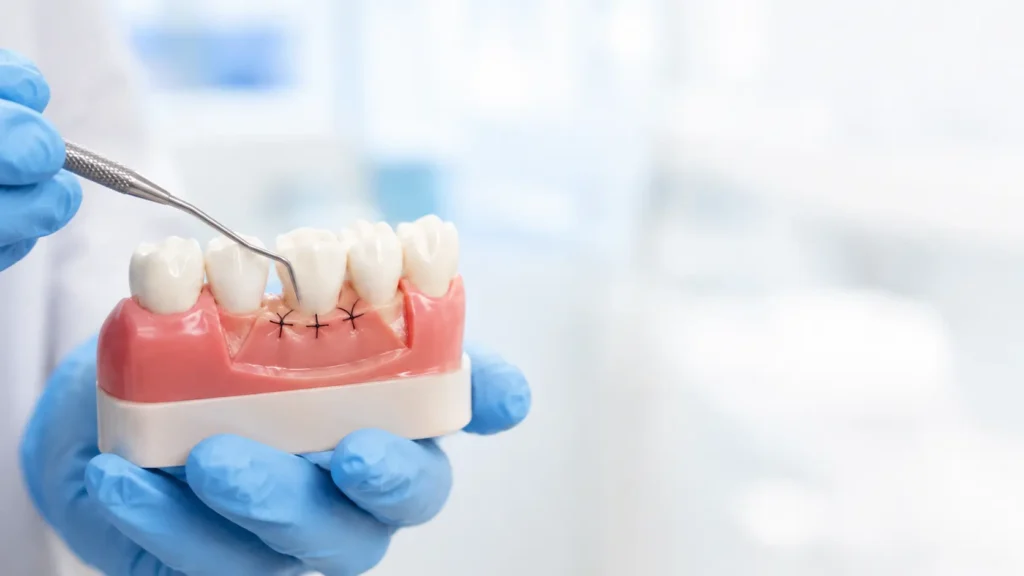

Signs You May Have Gum Disease
Many people do not notice gum disease in its early stages. If you experience any of the following symptoms, schedule a dental examination as soon as possible:
- Bleeding gums while brushing or flossing
- Red, swollen, or tender gums
- Persistent bad breath
- Receding gums
- Loose or shifting teeth
- Pain while chewing
- Increased tooth sensitivity
Benefits of Early Gum Disease Treatment
Treating gum disease early can help:
- Stop the infection from progressing
- Reduce gum inflammation and bleeding
- Preserve your natural teeth
- Improve your overall oral health
- Reduce the risk of future dental complications
- Support fresher breath and healthier gums
- Most gum disease is managed without surgery. Where tissue has receded or pockets stay deep after cleaning, gum surgery may be raised as an option.
What Increases Gum-Disease Risk?
Common risk factors include:
- Plaque and tartar buildup
- Smoking or tobacco use
- Diabetes
- Dry mouth
- Certain medications
- Hormonal changes
- Family history
- Difficulty cleaning around crowded teeth or dental work
Risk factors do not confirm a diagnosis. The condition of the gums and supporting bone must be examined.
How Gum Disease Is Diagnosed
Your assessment may include:
- Examination of the teeth and gums
- Periodontal pocket measurements
- Checking for bleeding and recession
- Review of tooth mobility
- Dental X-rays when needed
- Review of smoking, diabetes, medications and home care
Periodontal probing and X-rays help evaluate how the gums attach to the teeth and whether bone support has been affected.
Gum Disease Treatment Options
Professional Cleaning
Early gingivitis may improve after plaque and tartar are removed and daily brushing and interdental cleaning are improved.
A routine cleaning is not sufficient for every patient.
Scaling and Root Planing
Scaling and root planing is a non-surgical deep-cleaning treatment used when deposits and inflammation extend below the gumline.
Treatment may be completed in separate areas over one or more appointments. Local anaesthetic may be used when appropriate.
Periodontal Maintenance
After active gum-disease treatment, ongoing periodontal maintenance may be recommended.
The interval depends on:
- Disease severity
- Pocket depths
- Home care
- Smoking
- Diabetes
- Response to treatment
A fixed three- or six-month schedule is not appropriate for every patient.
Referral or Gum Surgery
Advanced or persistent periodontitis may require referral to a periodontist.
Specialist treatment can include:
- Periodontal surgery
- Gum grafting
- Bone-regeneration procedures
- Management of complex bone loss
The Canadian Dental Association advises that serious gum disease that does not improve with normal dental care may require treatment by a periodontist.
Can Gum Disease Be Cured?
Early plaque-related gingivitis can often be reversed.
Periodontitis is generally managed rather than permanently cured. Treatment and maintenance can help control inflammation and slow further damage, but continued home care and monitoring remain necessary.
How to Care for Your Gums After Treatment
Your dental team may recommend:
- Brushing twice daily
- Cleaning between teeth every day
- Using prescribed or recommended products
- Avoiding smoking and tobacco
- Managing diabetes with your healthcare provider
- Attending periodontal-maintenance visits
- Reporting new bleeding, swelling or tooth movement
Antibacterial rinses should be used only when recommended for your specific condition.
Gum Disease Treatment Cost in Vaughan
Cost depends on:
- Disease stage
- Number of areas treated
- Amount of scaling required
- Local anaesthetic
- Dental X-rays
- Maintenance visits
- Specialist referral
- Private insurance or CDCP coverage
My City Dental can provide an estimate after the periodontal assessment.
Does Insurance Cover Gum Disease Treatment?
Many private plans provide some coverage for:
- Periodontal examination
- Scaling
- Root planing
- Dental X-rays
- Periodontal maintenance
Coverage depends on scaling units, frequency limits, deductibles and annual maximums.
Direct billing does not guarantee that the entire fee will be reimbursed.
Does CDCP Cover Gum Disease Treatment?
CDCP may cover eligible periodontal services, including:
- Cleaning below the gumline
- Non-surgical gum-disease management
- Selected abscess treatment
- Some additional services requiring preauthorization
Coverage, units and patient charges depend on current program rules.
Visit the My City Dental CDCP page for broader program information.
Frequently Asked Questions
Are bleeding gums normal?
Occasional minor irritation can happen, but repeated bleeding may indicate inflammation or gum disease and should be assessed.
Can gingivitis be reversed?
Plaque-related gingivitis can often improve with professional cleaning and consistent brushing and interdental cleaning.
Can periodontitis be reversed?
Damage to supporting bone and tissue is not normally reversed through routine cleaning. Treatment focuses on controlling disease and preventing further loss.
Is gum-disease treatment painful?
Comfort varies. Local anaesthetic may be used during scaling and root planing. Temporary gum tenderness or sensitivity can occur afterward.
Is deep cleaning the same as routine cleaning?
No. Routine cleaning mainly removes deposits around and above the gumline. Scaling and root planing treats selected root surfaces below the gumline.
Will I need gum surgery?
Not every patient needs surgery. Advanced disease or areas that do not respond to non-surgical care may require specialist assessment.