

When Is Deep Cleaning Recommended?
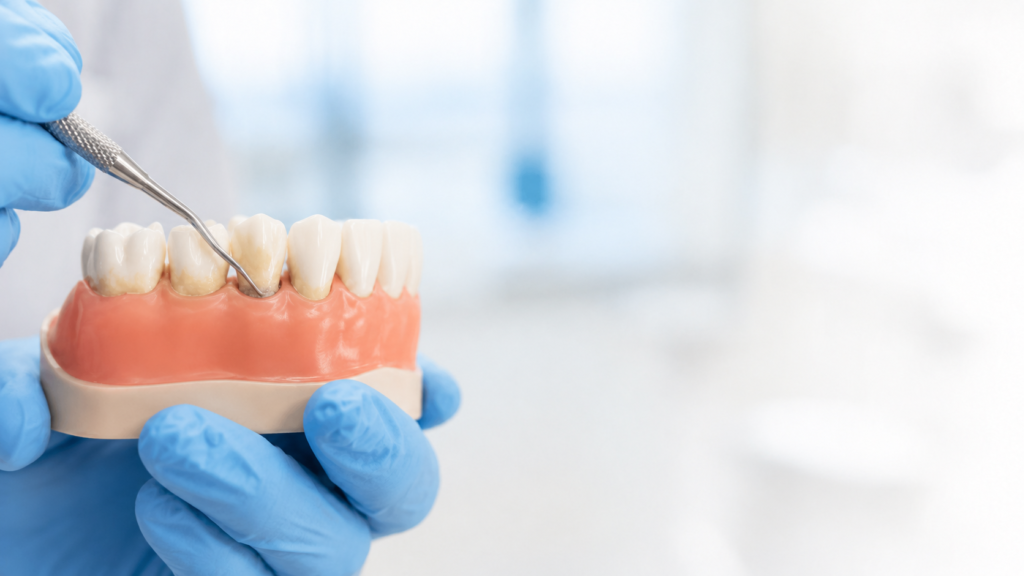
Scaling and root planing may be recommended when an examination shows:
- Tartar below the gumline
- Deep periodontal pockets
- Gum bleeding
- Gum recession
- Persistent inflammation
- Bone loss around teeth
- Periodontitis
- Difficulty cleaning affected root surfaces
Symptoms alone do not confirm that deep cleaning is needed. The diagnosis should be based on examination, periodontal measurements and appropriate dental X-rays.
Routine Cleaning Versus Scaling and Root Planing
Routine Teeth Cleaning
A routine teeth cleaning mainly removes plaque and tartar around and above the gumline.
It is generally used for preventive care when the supporting tissues remain reasonably healthy.
Scaling and Root Planing
Scaling and root planing reaches below the gumline and cleans affected root surfaces.
It is generally recommended when:
- Periodontal pockets are present
- Tartar extends beneath the gums
- Periodontitis has been diagnosed
- A routine cleaning cannot adequately treat the affected area
Early plaque-related gingivitis may improve with ordinary professional cleaning and better home care. Scaling and root planing is not automatically required for every patient with bleeding gums.
How Is the Need for Root Planing Diagnosed?
Your periodontal assessment may include:
- Review of symptoms and health history
- Examination of the gums
- Periodontal pocket measurements
- Bleeding assessment
- Gum-recession measurements
- Checking tooth mobility
- Evaluation of plaque and tartar
- Dental X-rays when needed
- Review of bone support
The dentist or dental hygienist will then determine whether you need:
- Routine cleaning
- Scaling and root planing
- Periodontal maintenance
- Gum surgery
- Periodontist referral
What Happens During Scaling and Root Planing?
1. The Treatment Area Is Assessed
The dental team identifies which teeth or areas require deeper cleaning.
Treatment may be divided into:
- One section
- Half of the mouth
- Separate quadrants
- Multiple appointments
2. Local Anaesthetic May Be Used
Local anaesthetic may be used to numb the gums and root surfaces.
The need depends on:
- Pocket depth
- Tooth sensitivity
- Amount of tartar
- Treatment area
- Patient comfort
3. Scaling Is Completed
Hand instruments, ultrasonic instruments or both may be used to remove plaque and tartar above and below the gumline.
4. Root Surfaces Are Cleaned
Affected root surfaces are carefully cleaned and smoothed.
5. Home-Care Instructions Are Provided
The dental team may explain how to clean around the treated teeth while the gums heal.
Scaling and root planing may require more than one appointment depending on the extent of disease.
Does Scaling and Root Planing Hurt?
Local anaesthetic can reduce discomfort during treatment.
After the appointment, some patients experience temporary:
- Gum tenderness
- Tooth sensitivity
- Mild bleeding
- Soreness while brushing
- Awareness of previously covered root surfaces
Experiences vary according to disease severity, treatment area and individual sensitivity.
Contact My City Dental if pain, swelling or bleeding becomes severe or does not improve.
How Many Appointments Are Needed?
The number of appointments depends on:
- Number of affected teeth
- Pocket depths
- Amount of tartar
- Tooth sensitivity
- Need for local anaesthetic
- Patient comfort
- Insurance or CDCP limits
- Treatment response
Some patients may have treatment completed in one visit. Others require separate appointments for different areas of the mouth.
What to Expect After Deep Cleaning
After treatment:
- Brush gently but consistently
- Clean between teeth as instructed
- Avoid tobacco
- Follow product-specific rinse instructions
- Avoid very hard foods if the area feels tender
- Take medication only as directed by an appropriate healthcare professional
Do not automatically use antibiotics or medicated mouth rinse unless they are recommended for your specific case.
Temporary sensitivity and gum tenderness are common after scaling and root planing.
Follow-Up and Periodontal Maintenance
A follow-up visit may be recommended after the tissues have had time to heal.
The dental team may reassess:
- Gum bleeding
- Pocket depths
- Inflammation
- Plaque control
- Tooth mobility
- Areas that remain difficult to clean
Depending on the response, the next step may be:
- Periodontal maintenance
- Additional scaling
- Improved home-care instruction
- Monitoring
- Referral to a periodontist
- Gum surgery for selected advanced areas
Maintenance intervals should be individualized. Not every patient automatically requires treatment every three or four months.
Benefits of Scaling and Root Planing
When clinically appropriate, treatment may help:
- Remove deposits below the gumline
- Reduce gum inflammation
- Reduce bleeding
- Improve access for daily cleaning
- Support healthier periodontal tissues
- Slow progression of periodontitis
- Reduce some sources of persistent bad breath
- Protect remaining tooth support
Results vary according to disease stage, smoking, diabetes, home care and ongoing maintenance.
Limitations and Possible Risks
Scaling and root planing:
- Does not permanently cure periodontitis
- Does not regrow all lost bone or gum tissue
- Does not guarantee tooth retention
- May cause temporary sensitivity
- May make gum recession more visible after swelling decreases
- Can require more than one appointment
- May not fully treat very deep pockets
- Requires ongoing home care
- May need to be followed by periodontal maintenance
- May require specialist treatment when disease is advanced
Cleveland Clinic lists tenderness, sensitivity, bleeding and visible gum recession among possible effects after deep cleaning.
Scaling and Root Planing Cost in Vaughan
The cost depends on:
- Number of areas treated
- Amount of scaling time
- Pocket depths
- Local anaesthetic
- Periodontal charting
- Dental X-rays
- Number of appointments
- Follow-up care
- Private insurance
- CDCP eligibility
My City Dental can provide an estimate after completing the gum-health assessment.
Do not publish a fixed price unless the clinic confirms its current fees and exactly what is included.
Does Insurance Cover Scaling and Root Planing?
Many private dental plans provide some periodontal coverage.
Plan limits may apply to:
- Scaling units
- Root-planing units
- Periodontal examinations
- Dental X-rays
- Local anaesthetic
- Maintenance visits
- Replacement or repeat treatment
Direct insurance billing does not guarantee full reimbursement.
Patients remain responsible for deductibles, co-payments and services beyond plan limits.
Does CDCP Cover Scaling and Root Planing?
The Canadian Dental Care Plan may cover eligible scaling and root-planing services.
For patients aged 17 and older, the current guide includes up to four combined units of scaling and root planing in a 12-month period without preauthorization. Additional units require preauthorization supported by clinical documentation such as periodontal charting, diagnosis and radiographs.
Patients may still owe:
- An income-based co-payment
- A difference between clinic and CDCP fees
- Costs beyond eligible units
- Treatment not approved through preauthorization
My City Dental accepts CDCP patients, but federal program rules determine coverage.
Visit the CDCP information page for broader details.
Frequently Asked Questions
Is scaling and root planing the same as deep cleaning?
Yes. Deep cleaning is the common patient term for scaling and root planing.
What is dental scaling?
Dental scaling removes plaque and hardened tartar from tooth surfaces. During periodontal treatment, scaling extends below the gumline.
What is root planing?
Root planing cleans and smooths affected tooth-root surfaces below the gumline.
Is deep cleaning necessary for gingivitis?
Not always. Early gingivitis may improve with routine cleaning and better daily plaque control. Deep cleaning is usually considered when periodontal pockets and below-gum deposits are present.
Does root planing make gums grow back?
It may help inflammation decrease and tissues heal more closely around the teeth, but it does not regrow all gum or bone already lost through periodontitis.
Does scaling and root planing cure gum disease?
It can help control periodontitis, but ongoing maintenance and daily home care remain necessary.
Can teeth become loose after deep cleaning?
Teeth may feel different after tartar and swollen tissue are reduced. Persistent or increasing mobility should be assessed.
How long does sensitivity last?
Temporary sensitivity varies. Contact the clinic if it is severe, worsening or does not gradually improve.
Can I eat after treatment?
Wait until numbness has resolved and follow the instructions given for your treatment. Softer foods may be more comfortable temporarily.
Will I need antibiotics?
Not routinely. Antibiotics or antimicrobial products may be considered for selected patients based on clinical findings.
How often will I need periodontal maintenance?
The schedule depends on pocket depths, disease severity, risk factors and response to treatment.
Does CDCP cover deep cleaning?
Eligible scaling and root planing may be covered within CDCP limits. Additional units require preauthorization under current rules.
Book a Scaling and Root Planing Assessment in Vaughan
Concerned about bleeding gums, deep gum pockets, gum recession or tartar below the gumline?
Schedule a gum-health assessment at My City Dental. Our dental team will determine whether routine cleaning, scaling and root planing, periodontal maintenance or specialist care may be appropriate.